

Summer on the High Plains doesn’t ask permission. The heat arrives fast, the wind picks up, and before long you’re watching cracked soil wondering where the moisture went. For sunflower growers, that question isn’t just philosophical — it’s the difference between a strong yield and a disappointing one.
The good news? You have more control over soil moisture than the weather forecast might suggest.
This post breaks down the most effective moisture retention practices for sunflower production on the High Plains — and why building water-holding capacity into your soil is one of the highest-return investments you can make as a grower.
The Soil Math That Changes Everything
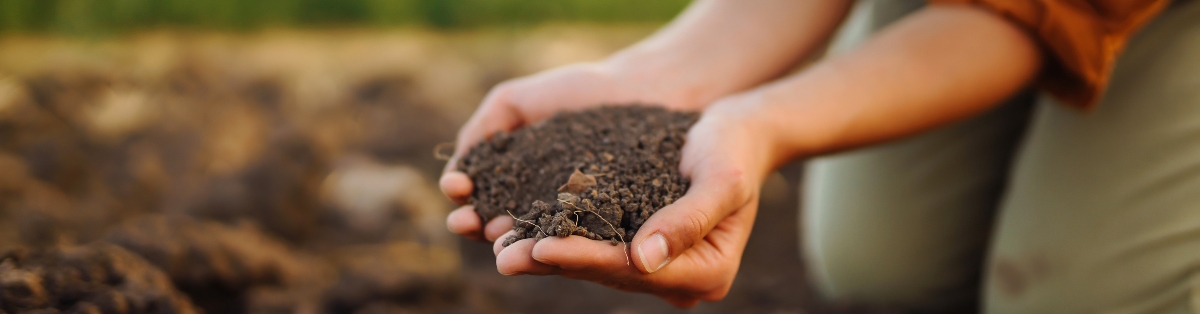
Let’s start with a number worth remembering:
For every 1% increase in organic matter, your soil can hold approximately 4% more water.
On a field that receives 12 inches of seasonal rainfall, that difference can be the margin between a plant that thrives through a dry stretch and one that goes into stress at a critical growth stage. And as you’ll see, the practices that build organic matter also happen to strengthen nearly every other aspect of your operation.
1. No-Till: Stop the Evaporation Before It Starts
Tillage disrupts soil structure, destroys fungal networks, and accelerates moisture loss through evaporation. No-till farming preserves the soil’s natural architecture — aggregate stability, pore space, and biological activity — all of which work together to pull water in and keep it there longer.
For sunflower growers transitioning to no-till, the first few seasons require patience. Residue management and weed pressure can be real challenges. But the long-term payoff in water retention, reduced erosion, and lower input costs makes it one of the most impactful shifts a grower can make.
Not sure what to look for on the label? Check out our Sunflower Oil Information to understand the health benefits of a high-oleic profile.
2. Soil Cover: Keep the Ground Dressed
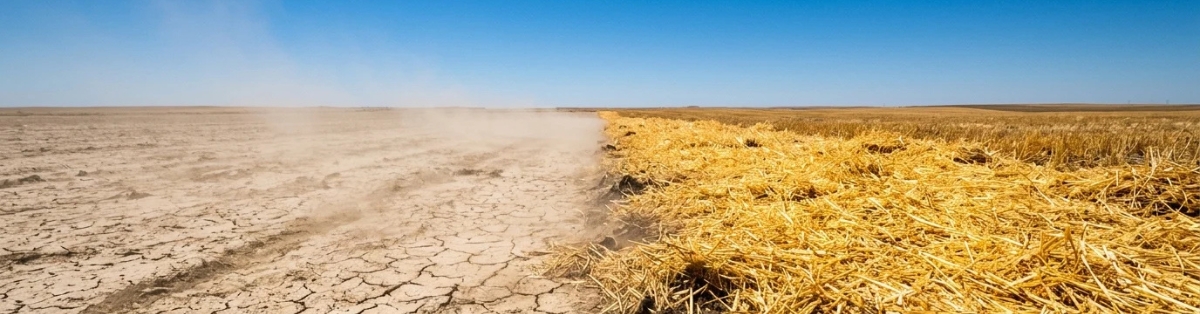
Bare soil is losing moisture constantly. Every hour of direct sun exposure on an uncovered surface accelerates evaporation. Keeping the ground covered — whether through crop residue, cover crops, or mulch — acts as a natural insulator, slowing moisture loss and moderating soil temperature.
On the High Plains, where wind compounds the problem, surface cover also reduces the physical evaporation driven by air movement across the field.
Explore our sunflower-based Performance Equine feed — high fat, low starch, and built for steady digestion. [See our Healthy Horse Feed →]
3. Crop Rotation: Break the Cycle, Build the Biology
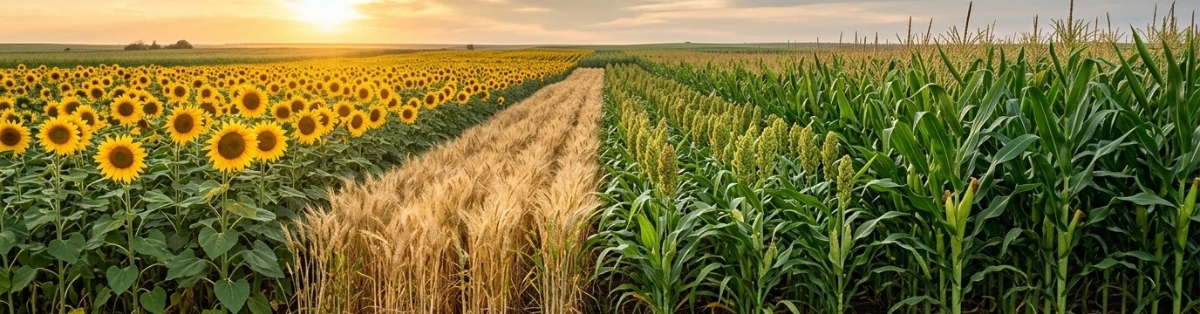
Rotating sunflowers with other crops — small grains, corn, sorghum — does more than manage disease and pest pressure. It builds biological diversity in the soil. Different root systems reach different depths, create different pore structures, and leave behind different types of organic residue.
That residue feeds the microbial community that, over time, converts organic material into stable humus — the long-lasting form of organic matter most responsible for water retention.
A well-designed rotation keeps living biology active longer throughout the season, which directly supports moisture cycling in the root zone.
4. Living Roots: Keep Something Growing
Bare fallow fields are biological deserts. Roots — whether from a cash crop, a cover crop, or a perennial — actively drive water infiltration, create channels through compacted layers, and feed the microbial populations that hold soil structure together.
The goal is simple: minimize the weeks when no roots are in the ground. Even a low-cost cover crop blend between sunflower seasons can meaningfully increase organic matter over a 3–5 year window, with compounding benefits to water retention.
5. Livestock Integration: Close the Loop on Organic Matter
Grazing cover crops or crop residue integrates livestock into the fertility cycle in a way that benefits soil health directly. Manure adds organic matter, stimulates microbial activity, and feeds the biology that builds water-holding capacity. Hoof action, when managed correctly, can also improve water infiltration by breaking surface crusting.
It’s not a fit for every operation, but for growers who have access to cattle or have neighbors who run livestock, the soil health benefits of integration are well-documented.
Want to see this stability in action? Browse our Recipes for high-heat cooking inspiration using high oleic oil.
Timing Matters Too — Especially at the Root Zone
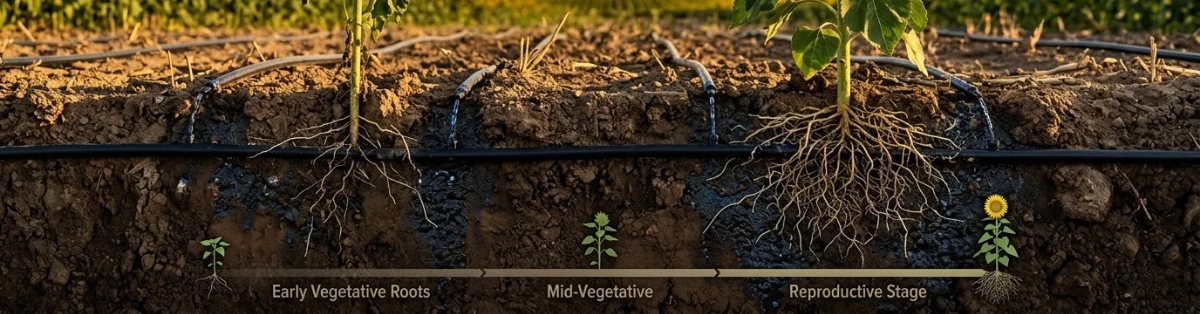
Moisture retention at the soil level is foundational, but how and when you deliver water to your sunflowers is equally critical. Overwatering at the wrong growth stages can lead to taller plants with thinner stalks, larger leaf growth, and smaller heads prone to lodging — all of which cut into your yield and oil content.
Ready to upgrade your kitchen? Shop our Consumer Bottles and experience the difference of 100% natural, high-oleic oil.
Every practice listed above — no-till, soil cover, crop rotation, living roots, livestock integration — does something individual and valuable. But what makes them powerful is the compound effect. When you stack these practices over multiple seasons, organic matter builds, water retention increases, and your fields become more resilient to the kind of hot, dry summers that define growing conditions on the High Plains.
That resilience is what keeps your investment in the ground — and your yield headed in the right direction.
The Bigger Picture
Every practice listed above — no-till, soil cover, crop rotation, living roots, livestock integration — does something individual and valuable. But what makes them powerful is the compound effect. When you stack these practices over multiple seasons, organic matter builds, water retention increases, and your fields become more resilient to the kind of hot, dry summers that define growing conditions on the High Plains.
That resilience is what keeps your investment in the ground — and your yield headed in the right direction.
Explore our Healthy Horse Feed lineup — built around sunflower nutrition for horses that thrive on consistency. [Shop Performance Equine →]
Growing High Oleic Sunflowers with Colorado Mills?
If you’re producing or considering High Oleic Sunflowers for Colorado Mills, we want to help you get the most out of every acre. Whether it’s agronomic support, contract information, or questions about oil premiums, we’re a phone call away.

Colorado Mills is a full-cycle, environmentally responsible sunflower processing company based on the High Plains. We partner with growers to produce heart-healthy sunflower oil and sustainable livestock feed — from seed to shelf
0 Comments