If you scroll through YouTube, TikTok, or health podcasts, you’ve probably heard it:
“Seed oils are toxic.”
“Sunflower oil is bad for you.”
Sunflower oil often gets thrown into the “bad” bucket without any nuance. But there’s a key detail most people skip: Is sunflower oil bad? Not all sunflower oil is the same.
There are different types, with very different fat profiles and uses. And the one most critics attack is not the one most commonly grown and used in the United States.
Let’s clear that up.
Curious what actually goes into your cooking oil? Learn how Colorado‑grown, high oleic sunflower oil is made and why it’s different: Explore our Sunflower Oil Overview
The 3 Types of Sunflower Oil (Only One Gets Blamed)
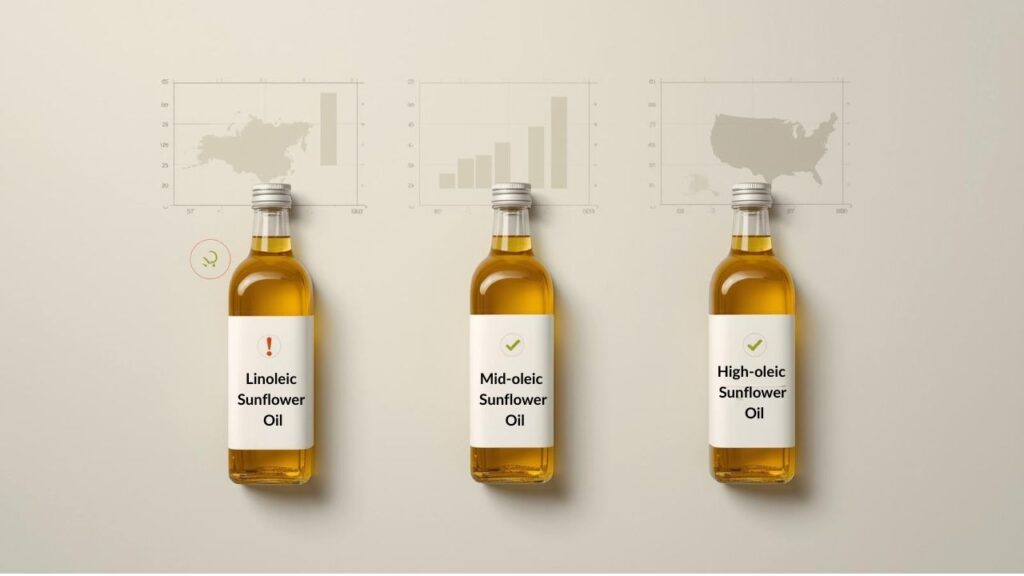
When someone says “sunflower oil,” they usually ignore that there are three main types:
- Linoleic sunflower oil
- Mid‑oleic sunflower oil
- High oleic sunflower oil
Most of the online criticism is aimed at linoleic sunflower oil, which:
- Is higher in polyunsaturated fats (PUFAs), especially omega‑6
- Is largely produced in Eastern Europe and Russia
- Is not the primary type grown in the U.S.
Too much omega‑6 from highly processed foods and repeatedly overheated oils can indeed be an issue. But that doesn’t automatically mean all sunflower oil, in all forms, is bad.
The simple truth: the sunflower oil most people are warning you about is not the one most commonly used here.
Want to go beyond headlines and see the science for yourself? Browse research, articles, and resources on sunflower oil and fats: Read Our Sunflower Oil Research Articles
What We Actually Use in the U.S.: High Oleic Sunflower Oil
In the United States, the dominant type is high oleic sunflower oil.
“High oleic” refers to its fat profile. This oil is bred to be rich in oleic acid, a monounsaturated fat—the same type of fat found in olive oil that is often called “heart‑healthy.”
High oleic sunflower oil is designed to have:
- More monounsaturated fats (oleic acid)
- Lower polyunsaturated fats than traditional linoleic sunflower oil
- Lower saturated fats compared to some other options
That combination gives high oleic sunflower oil:
- A more heart‑friendly fat profile
- Better stability when heated
- A performance and nutrition profile closer to what many people actually want in a daily cooking oil
So when you hear “sunflower oil is bad,” that statement completely ignores how different high oleic is from linoleic.
Ready to choose a sunflower oil that matches your values and your kitchen? See how our high oleic sunflower oil is grown, pressed, and bottled in Colorado: Discover Colorado Mills Sunflower Oil
Why Monounsaturated Fats Matter

Fats generally fall into three broad categories:
- Saturated fats – found in butter, lard, some tropical oils
- Polyunsaturated fats – include omega‑3 and omega‑6
- Monounsaturated fats – found in olive oil, avocado oil, and high oleic sunflower oil
Monounsaturated fats are widely viewed as supportive of heart health when part of a balanced diet. Diets higher in monounsaturated fats can help:
- Improve cholesterol profiles
- Support cardiovascular health
- Offer better stability for everyday cooking compared to many high‑PUFA oils
Because high oleic sunflower oil is rich in monounsaturated fats, it behaves differently than the “omega‑6 heavy” sunflower oils that fuel a lot of online fear.
Looking for a neutral, high‑oleic oil for everyday cooking and baking? Stock your pantry with Colorado‑grown sunflower oil shipped straight to you: Shop Sunflower Oil Online
How a “Good” Oil Can Turn “Bad”
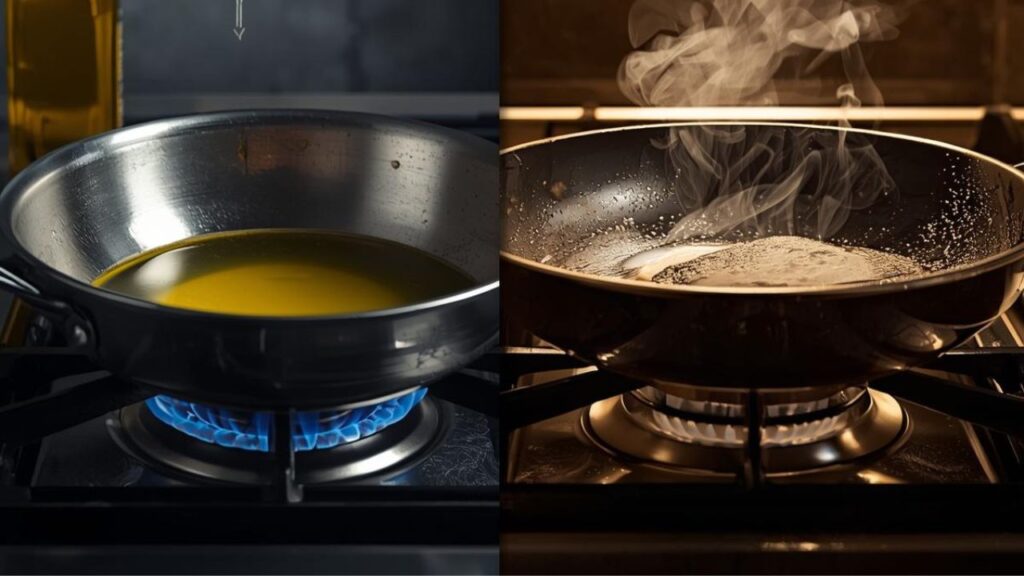
Another thing you rarely hear in short social clips:
You can turn a good oil into a bad one by mistreating it.
Even a well‑balanced oil can degrade if you:
- Overheat it far past its smoke point
- Reuse it over and over for intense deep frying
- Leave it exposed to heat, light, and air for long periods
When oils are abused like this, they can oxidize and form undesirable compounds. That’s less about whether the oil came from a seed or a fruit, and more about how it’s used.
High oleic sunflower oil, with its higher monounsaturated content, is:
- More stable for everyday cooking than many traditional high‑PUFA oils
- Well‑suited for sautéing, roasting, baking, and moderate frying
But like any oil, it still needs reasonable care:
- Avoid constantly cooking on maximum heat
- Don’t reuse the same oil again and again
- Store it in a cool, dark place with the cap tightly closed
Used properly, high oleic sunflower oil can be a reliable, everyday option—not the villain it’s often made out to be.
Want ideas for putting high oleic sunflower oil to work in your kitchen? From roasting veggies to baking, find recipes that show you exactly how to use it: Browse Sunflower Oil Recipes
Why Colorado Mills Backs High Oleic Sunflower Oil
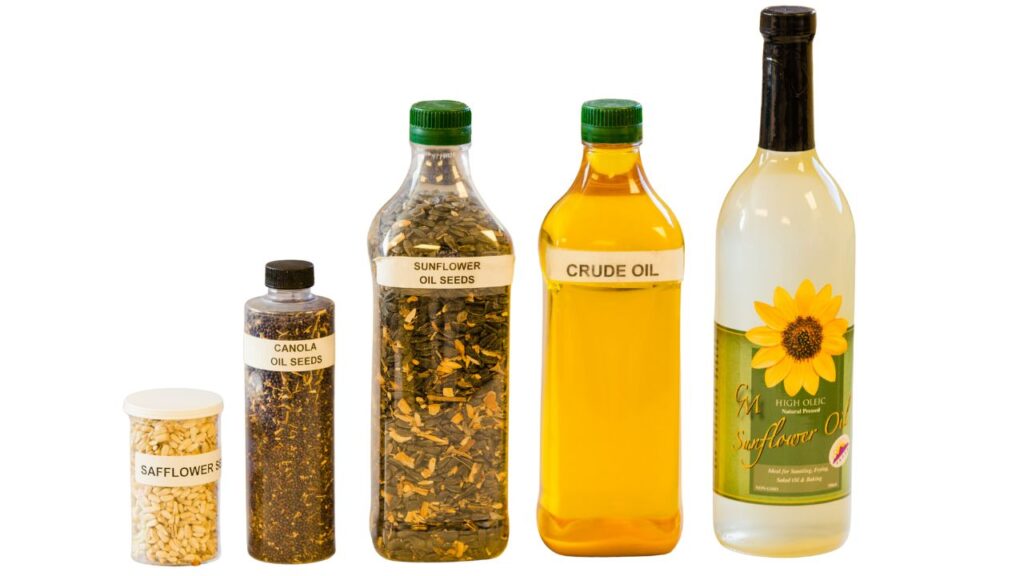
At Colorado Mills, we’ve chosen to focus on high oleic sunflower oil for a reason.
Our approach:
- High oleic focus
We work specifically with high oleic sunflower seeds to produce an oil high in monounsaturated fats and suitable for modern kitchens. - Full‑cycle, environmentally friendly system
We connect closely with local growers and use a zero‑waste model—after pressing the oil, we use the remaining material in livestock feeds, so nothing is wasted. - Clarity over fear
We believe you deserve accurate, practical information—not just scary headlines. Our goal is to explain what’s really in your oil and how to use it wisely.
We see high oleic sunflower oil as a smart choice for people who want performance, balanced nutrition, and responsible production in one bottle.
Are you a grower interested in high oleic sunflower production? See how we work with farmers across the region and what we look for in our seeds: Information for Sunflower Growers
How to Use High Oleic Sunflower Oil at Home

Here are some simple ways to make the most of it:
Great everyday uses:
- Sautéing vegetables, fish, or chicken
- Oven‑roasting potatoes and other veggies
- Baking when you want a neutral‑tasting oil
- Light pan‑frying within a reasonable heat range
Quick tips:
- Use medium to medium‑high heat, not “max” every time
- If oil starts smoking heavily, turn the heat down
- Don’t keep old, heavily used frying oil
- Store your bottle away from direct sunlight and heat
With these habits, high oleic sunflower oil can be a stable, versatile, and heart‑conscious staple in your kitchen.
Want another perspective to go along with what you’ve just read? Health and wellness coach Donna Hatton recommends this seed oil explainer: Watch on YouTube
The Bottom Line: Context Matters
Is sunflower oil bad?
The honest answer: it depends which sunflower oil you mean and how you’re using it.
- The heavily criticized, omega‑6‑heavy linoleic sunflower oil is not the same as
- The monounsaturated‑rich, more stable high oleic sunflower oil commonly used in the U.S.
When you look beyond the headlines, you’ll see that high oleic sunflower oil can absolutely have a place in a balanced, modern diet—especially when it’s produced responsibly and used correctly.
Wondering how it performs in real kitchens and real operations? See what chefs, families, and feed customers have to say about Colorado Mills: Read Testimonials
Want to Learn More or Try It?
If you want to see how high oleic sunflower oil is grown, pressed, and used—without the noise and fear:
👉 Learn more or purchase our sunflower oil here:
https://www.comills.com/sunflower-oil/
We’re here to help you cook with confidence, not confusion.
0 Comments