
Colorado Mills Kitchen · Recipe
Focaccia with Sunflower Oil: A Colorado Mills Recipe
Good bread does not need to be complicated. A bowl of dough, a little patience, and a well-oiled cast-iron pan can turn a handful of ingredients into something worth gathering around.
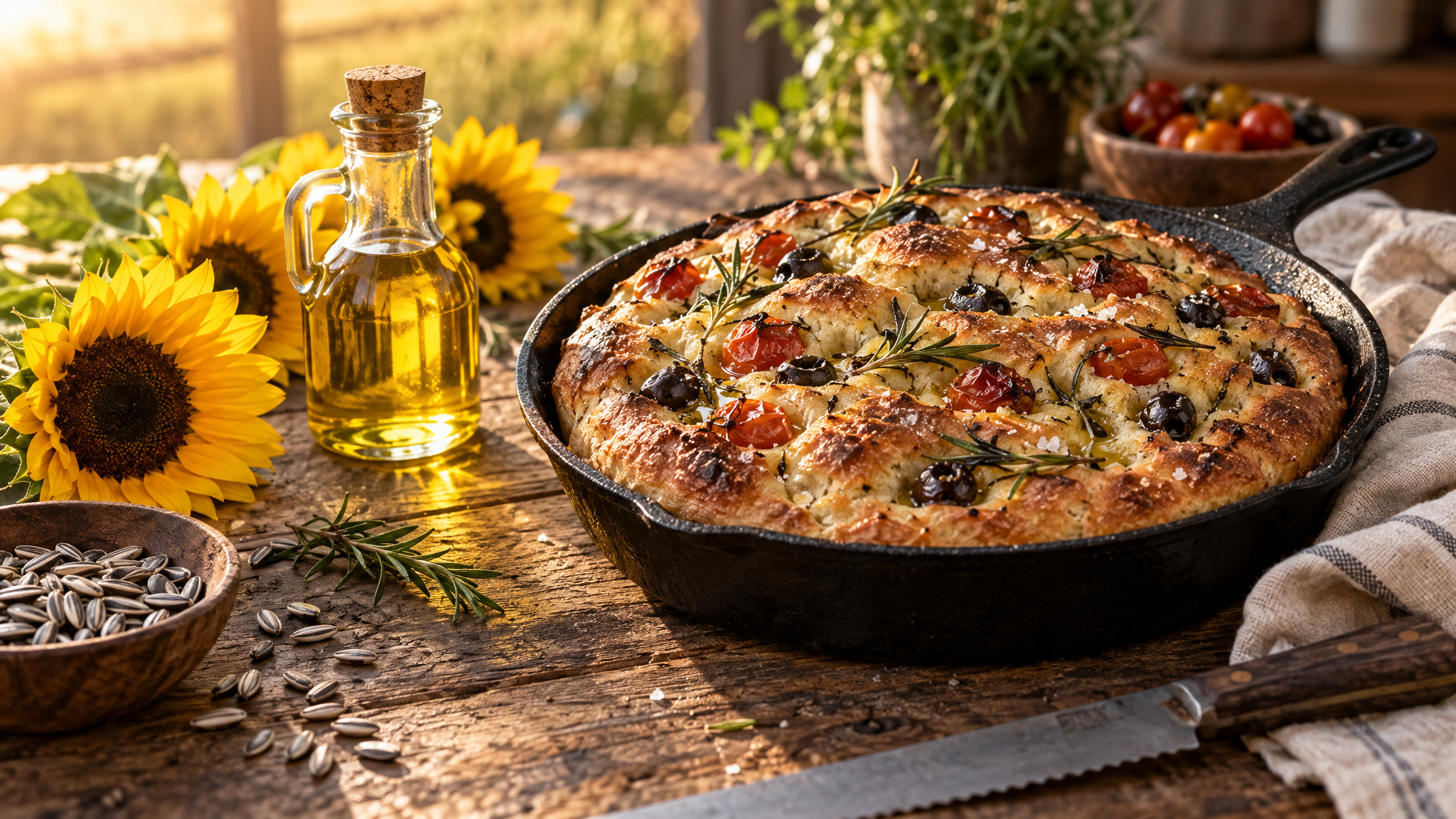
This focaccia with sunflower oil uses Colorado Mills Sunflower Oil in place of the olive oil traditionally associated with the bread. The original recipe describes a loaf that is dense yet airy, with a thin, crisp top and bottom—ready to serve alongside dinner, slice for sandwiches, or use as a base for homemade pizza.
The recipe and original photography come courtesy of Chef Emma Nemechek of SWEETENED Patisserie. Here is how to bring it to your own kitchen, with the ingredients organized and the resting stages laid out clearly.
1. Making Focaccia with Sunflower Oil
In this recipe, sunflower oil goes into the dough, coats the cast-iron pans, and gets brushed over the surface before the final rise. Each application is part of the process, so keep a little extra oil nearby beyond the amount measured for the dough.
The method starts with a sponge: a mixture of yeast, warm water, and flour that ferments before the remaining ingredients are added. After mixing, the dough rests in stages before baking.
Plan for a relaxed baking session rather than a quick bread project. The listed fermentation and resting stages total 2 hours and 15 minutes, before mixing, shaping, and baking. That is longer than the original post’s stated 1½-hour prep time, so leave yourself enough room in the day.
2. Ingredients for Sunflower Oil Focaccia
Measure the ingredients in grams to follow Chef Emma’s original formula.
For the sponge
- ●9 grams active dry yeast
- ●505 grams water, at 95°F
- ●320 grams bread flour
To add after the sponge ferments
- ●40 grams Colorado Mills Sunflower Oil
- ●50 grams granulated sugar
To finish the dough
- ●450 grams bread flour
- ●20 grams salt
For the pans and surface
- ●Additional Colorado Mills Sunflower Oil
- ●Your choice of toppings
- ●Sea salt for sprinkling
Have a stand mixer with a dough hook, a spatula, plastic wrap, and cast-iron pans ready before starting. The original method uses a 4.5-quart mixer and includes baking guidance for both 12-inch and 6-inch cast-iron pans.
3. Mix the Sponge and Develop the Dough
Start the sponge. In the mixer bowl, combine the yeast, 95°F water, and 320 grams of bread flour. Stir with a spatula, cover with plastic wrap, and let ferment for 45 minutes.
Add the oil and sugar. Stir the 40 grams of sunflower oil and 50 grams of granulated sugar into the fermented sponge using a spatula.
Finish mixing. Add the remaining 450 grams of bread flour and the 20 grams of salt. Using the dough hook, mix until all the flour is moistened. Then develop the dough on medium speed for 5–6 minutes.
4. Rest, Dimple, and Bake
Oil the pans. Coat the cast-iron pans with sunflower oil, then place the dough in them. Cover with plastic wrap and let rest for 30 minutes.
Gently spread the dough. Work it outward toward the edges of the pans. Cover again and rest for another 30 minutes.
Add the finishing touches. Brush the surface with sunflower oil. Press your fingertips into the dough to create dimples, add your toppings, and sprinkle with sea salt.
Give it a final rise. Cover with plastic wrap and proof for 30 minutes. Preheat the oven to 350°F during this stage.
Remove the plastic wrap before baking. At 350°F, Chef Emma’s original baking guidance is:
Baking Times at 350°F
| Pan Size | Bake Time |
|---|---|
| 12-inch cast iron | 15–20 minutes, for a softer bake |
| 6-inch cast iron | 13–15 minutes |
Look for a golden-brown surface and a springy feel when checking doneness. Pan size and dough thickness can affect the result, so use those cues alongside the timer.
5. Make the Toppings Your Own
The original recipe leaves the toppings open—and that is part of the fun. Keep the surface simple or arrange your chosen ingredients into a design before the final rise.
For your first batch, a straightforward topping combination makes it easier to focus on the dough and learn how it bakes in your pans. From there, experiment with different arrangements and flavors.
This bread is perfect as a side, sandwich bread, or even as a homemade pizza dough. Get creative with your toppings and design something fun—snap a picture and make sure to share it with us on Facebook and Instagram! Find the original recipe here: Focaccia with Sunflower Oil.
Shout out to Chef Emma Nemechek of SWEETENED Patisserie for the recipe!
6. Bring Colorado Mills to Your Kitchen
This recipe offers a hands-on way to put Colorado Mills Sunflower Oil to work beyond the frying pan.
Colorado Mills connects sunflower growers and customers through a full-cycle approach: producing sunflower oil and using the remaining sunflower material in livestock feed. It is a connection between the crop, the kitchen, and the livestock producer.
Ready to try a batch?
Explore Colorado Mills, then share your finished focaccia with us on Facebook or Instagram. We would love to see what you create.
Recipe and original photo credit: Chef Emma Nemechek of SWEETENED Patisserie.